
The United Forum of Bank Unions (UFBU), an umbrella body of nine unions, on Tuesday gave a call for a two-day strike from March 15 to protest against the proposed privatisation of two state-owned lenders. In the Union Budget presented last week, Finance Minister Nirmala Sitharaman announced the privatisation of two Public Sector Banks (PSBs) as part of its disinvestment plan. The government has already privatised IDBI Bank by selling its majority stake in the lender to LIC in 2019 and merged 14 public sector banks in the last four years.

Government is considering conversion of the country's biggest financial institution, IDBI, into a bank, Minister of State for Finance Anandrao Adsul said on Monday.

The IPO wave of 2025 is here, and it's bigger than ever. From fintech unicorns to financial powerhouses and infrastructure giants, some of India's biggest names are all set to make their stock market debut. PhonePe, Zepto, Tata Capital, NSE, NSDL, and JSW Cement are just a few of the highly awaited listings that have investors and analysts buzzing with excitement.

ED is probing Mallya and KFA under anti-money laundering laws in connection with a Rs 900 crore (Rs 9 billion) loan default of IDBI bank
IDBI Bank, UTI Bank, Citibank and Standard Chartered Bank on Wednesday came together to launch an independent shared automatic teller machine network, covering six million cardholders in 100 cities of India.
IDBI Bank is looking for Team Leaders, Sales Officers and Tele-Sales Officers to promote their personal loan products.
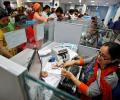
If the earnings in the first quarter of the current financial year are an indication, most banks, particularly those majority-owned by the government, have fared well, reveals Tamal Bandyopadhyay.

Unlike any other national asset, which is typically sold to the highest bidder, the profile of the bidder is the most important criterion for a licence to bank, and even for acquiring more than 5 per cent stake, explains Tamal Bandyopadhyay.
"We have already obtained the licence from the Reserve Bank of India to add 200 branches by March 2009. However, the expansion was delayed for want of staff. We should be opening the new branches, which will take the tally to 700, by May this year," CMD Yogesh Agarwal said. He added that the bank's total capital adequacy ratio was 12 per cent at present and it was in talks with the government for further fund infusion.
The bank approached RBI for the second time in August this year. The erstwhile development financial institution had approached the regulator in 2007 to get into the private equity business. While no formal proposal was moved, RBI had then advised the bank to concentrate on its upcoming life insurance business. Its joint venture with Fortis and Federal Bank is now up and running.
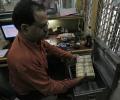
The government is open to providing more capital than that announced in the Budget.
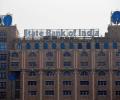
The rating agency revised the outlook for EXIM, SBI, Bank of Baroda, Bank of Baroda (New Zealand), Bank of India, Canara Bank, Punjab National Bank, ICICI Bank, Axis Bank while affirming their ratings. At the same time, Fitch has affirmed IDBI Bank Ltd's (IDBI) rating, while maintaining the outlook at negative.
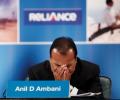
Reliance Power (RPower) has defaulted on payment of interest worth Rs 1.17 crore to DBS Bank India and Rs 44 lakh to IDBI Bank. It failed to pay up interest on October 30, 2021. The firm, part of the Anil Ambani-promoted Reliance group, in filing with BSE, said it has term loans and working capital arrangements with three lenders - YES Bank, IDBI Bank and DBS. Its stock closed 1.41 per cent lower at Rs 12.6 per share on the BSE on December 1. About exposure of YES Bank, there is a 'standstill' applicable till December 26, 2021.

As many as 6,801 cases of fraud were reported by scheduled commercial banks and select financial institutions involving an amount of Rs 71,542.93 crore in the last fiscal.
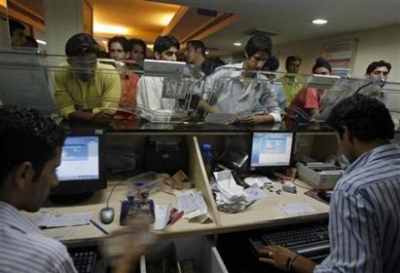
Customers will not be able to conduct transactions in banks for 4 days in a row as they will be closed from Thursday in many states.
RBI said the improvement in asset quality was driven by state-run lenders which saw a drop both in both GNPA and in the net NPA ratios.

The finance ministry on Wednesday allowed all private sector banks to participate in government-related business, like collection of taxes. pension payments and small savings schemes. At the moment, only few large private sector are allowed to conduct government-related business.

The 100-stock largecap basket of Mutual funds (MFs) has seen a major reshuffle in the latest semi-annual reclassification with seven midcap stocks and four new listings earning the largecap tag. According to a report from Nuvama Alternative & Quantitative Research, the midcap stocks that have been upgraded include CG Power, Rail Vikas Nigam, ICICI Prudential Life Insurance, Polycab India, Indus Towers, Cummins India, and Info Edge.

'Inter-ministerial coordination, information on the proposed PSUs, and due diligence are taking longer than expected to conclude the process.'

The Indian government has appointed Finance Secretary Tuhin Kanta Pandey as the new chairman of the Securities and Exchange Board of India (SEBI). Pandey, a 1987-batch IAS officer, will replace Madhabi Puri Buch, whose three-year tenure ends on February 28. Pandey's appointment comes at a time when the markets are experiencing bear pressure due to withdrawals by foreign institutional investors (FIIs). Pandey has extensive experience in the finance ministry, having served as the longest-serving secretary in the Department of Investment and Public Asset Management (DIPAM) and the Department of Public Enterprises (DPE). He also played a key role in the framing of the 2025-26 Budget and the drafting of the new Income Tax Bill. Pandey's appointment is for an initial period of three years.
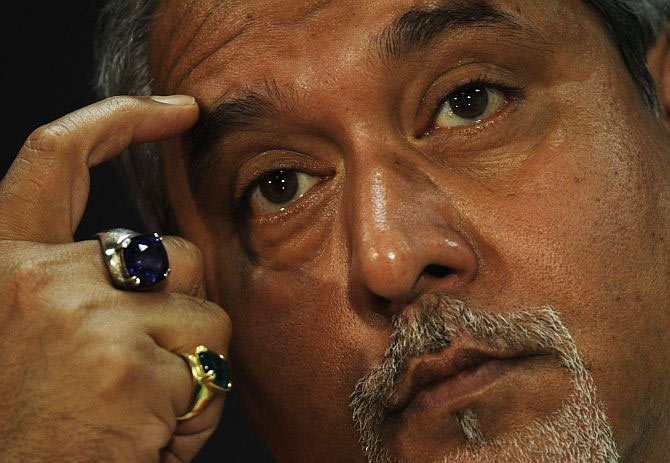
The special court on Monday rejected Kingfisher's plea challenging ED's claim that Rs 430 crore (Rs 4.3 billion) was siphoned off and used to acquire properties abroad.
The agency has stated in detail in the charge sheet how funds of about Rs 400 crore were moved abroad in alleged violation of rules.
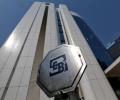
Capital markets regulator Sebi has kept in 'abeyance' the proposed initial share sale of securities depository NSDL. However, the Securities and Exchange Board of India (Sebi) did not clarify further. The National Securities Depository Ltd (NSDL) filed its preliminary papers with the capital markets regulator on July 7.
The Reserve Bank of India's move to raise ceiling on NRE rupee deposits have prompted IDBI, Union Bank of India and Yes Bank to increase interest rates on fixed deposits of non-resident Indians.\n\n

Lakhs of employees of public sector banks continued their strike on the second day on Friday as well to protest against proposed privatisation of banks by the government impacting normal operation across the country. Shutters of branches across many parts of the country on Friday were down following the strike call given by the United Forum of Bank Union (UFBU), an umbrella body of nine bank unions including All India Bank Officers' Confederation (AIBOC), All India Bank Employees Association (AIBEA) and National Organisation of Bank Workers (NOBW). As a result, services such as deposits and withdrawal at branches, cheque clearance and loan approvals remains paralaysed due to the two-day strike ending later in the day.
Even as competition to garner deposits is intensifying into a tight liquidity and high credit growth scenario, Bank of Baroda (BoB) has hiked deposit rates for the second time in the current quarter. Also, private lender IDBI Bank has come out with a limited period offer on its term deposits. It is offering 7.6 per cent interest rate for a tenor of 700 days, effective from December 2022.

Seasoned bureaucrat and a stickler for rules Finance Secretary Tuhin Kanta Pandey will be at the helm of capital market regulator, Securities and Exchange Board of India (SEBI), for three years. The 1987-batch Odisha-cadre Indian Administrative Service (IAS) officer, Pandey, would replace Madhabi Puri Buch, whose three-year term ends on Friday.

It won't be easy for the banking sector to better its performance every quarter, predicts Tamal Bandyopadhyay.
The United Forum of Bank Unions (UFBU), an umbrella body of nine unions, has given a call for a two-day strike from December 16 to protest against the proposed privatisation of two state-owned lenders. In the Union Budget presented in February, Finance Minister Nirmala Sitharaman had announced the privatisation of two public sector banks (PSBs) as part of its disinvestment plan. The government has already privatised IDBI Bank by selling its majority stake in the lender to LIC in 2019 and merged 14 public sector banks in the past four years.
The Industrial Development Bank of India will acquire 10 per cent equity stake in the Nepal Development Bank Ltd, a private sector bank based in Kathmandu.
Lending rates have started rising after more than two years. Five banks have increased their benchmark lending rate -- or the base rate -- even as the country's largest lender, State Bank of India, decided to maintain status quo. All corporate and retail loan rates linked to the base rate will now go up.

The government is finalising appointment of at least nine public sector bank chiefs and a dozen executive directors who would replace them or fill existing vacancies.
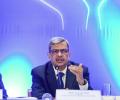
'Had there been no war, maybe, we would come out with a 7.5 per cent stake sale.' 'At this point in time, a 3.5 per cent stake sale looked good.'
